How Long Does It Take to Become an EKG Technician?
See if you qualify for Electrocardiogram (ECG/EKG) programs
Answer a few questions in 2 minutes. Free, no commitment.
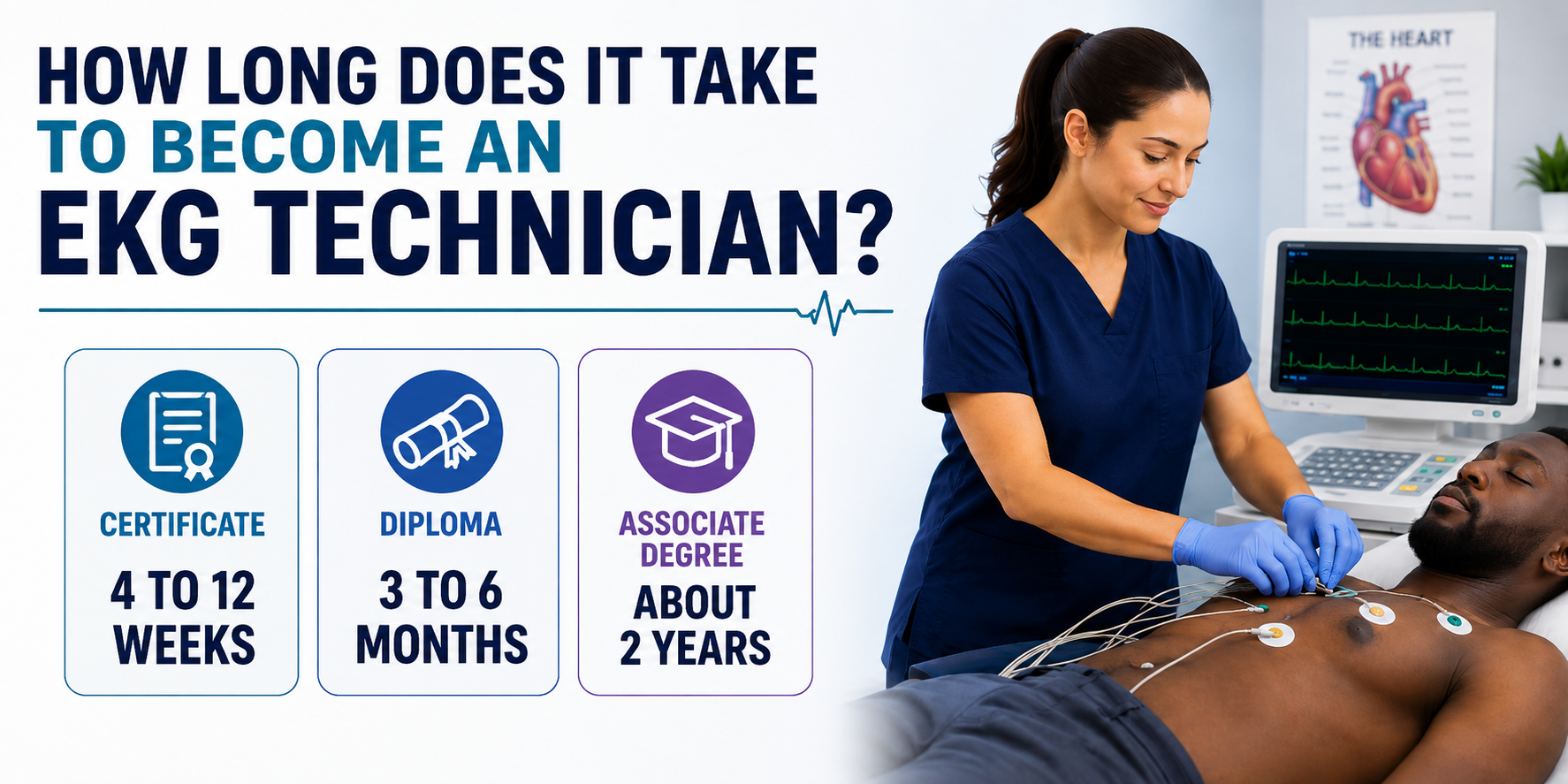
Becoming an EKG technician usually takes 4 to 12 weeks through a certificate program, and some accelerated courses finish in as little as about 2 weeks. Longer routes take more time: a diploma program runs 3 to 6 months, and an associate degree takes about 2 years. So the honest answer is weeks to months, not years. An EKG technician runs electrocardiogram tests that record the heart's electrical activity for a physician to read, and because the job needs a short program rather than a college degree, the timeline is mostly the training plus a certification exam. The program type, the pace you study at, and the credential you choose decide where you land in that range.
Combined EKG, Laboratory, and Phlebotomy Certificates (About 9 Months)
These certificates train you in EKG, laboratory assisting, and phlebotomy together. They take longer than a standalone EKG course, about nine months, but you finish qualified for several entry-level roles at once.
Laboratory Assistant, EKG, and Phlebotomist Certificate - Las Vegas College
An in-person combined certificate covering EKG, lab assisting, and phlebotomy, completed in as few as nine months and built to prepare you for entry-level work across all three.
Laboratory Assistant, EKG, and Phlebotomist Certificate - Houston Career Institute
A combined in-person program that pairs EKG training with laboratory and phlebotomy skills in about 36 weeks.
Frequently Asked Questions
How long does it take to become an EKG technician?
Most people finish a certificate program in 4 to 12 weeks, with accelerated courses as short as about 2 weeks. Diploma programs run 3 to 6 months, and an associate degree takes about 2 years. Add a short window to pass a certification exam, and the certificate path can take just weeks to a few months overall.
How many years is the ECG course?
It is usually counted in weeks or months. A standalone ECG, or EKG, certificate typically runs 4 to 12 weeks. Only an associate degree, which is optional and aimed at broader cardiovascular careers, takes about 2 years, and most students do not need a multi-year program to start working.
Can you become an EKG technician in 2 weeks?
Yes, some accelerated certificate programs can be done in about 2 weeks of full-time study, though 4 to 12 weeks is more typical. A 2-week course moves fast and still requires passing a certification exam afterward, so build that step into your plan. If speed matters most, compare the quickest options before enrolling.
What degree do you need to become an EKG technician?
None. You do not need a college degree. The standard entry point is a high school diploma or GED, a short EKG training program, and a national certification such as the CET or NCET. A degree is optional and only useful if you plan to advance into broader cardiovascular roles later.
How long does it take to get EKG certification after training?
Usually a few days to a few weeks. You typically study for the exam during your program, then schedule and sit it once you finish. Computer-based exams often return results quickly, so after you pass you can start applying for jobs with your credential in hand.
Choosing Your EKG Training Timeline
The fastest way into EKG work is a certificate, often 4 to 12 weeks plus a short certification step, while diploma and associate routes trade more time for broader training. The right path depends on how soon you want to start and whether you plan to advance later.
Compare EKG programs on Dreambound by length, pace, and credential, then pick the timeline that fits your goals.